Streamer and Content Creator Mental Health — What I See as a Psychiatrist
By John Nicholas Jung Shumate, MD, JD | The Jeong Center for Psychiatry and Psychotherapy
Last updated: September 13, 2026
Content creators and streamers face elevated rates of burnout (62%), performance-related anxiety (69%), and financial insecurity (69%), according to a 2025 study of 542 North American creators. The most common mental health challenges include circadian rhythm disruption from late-night streaming, identity confusion between on-camera and private selves, parasocial relationship strain, and algorithmic pressure that penalizes time away from the platform.
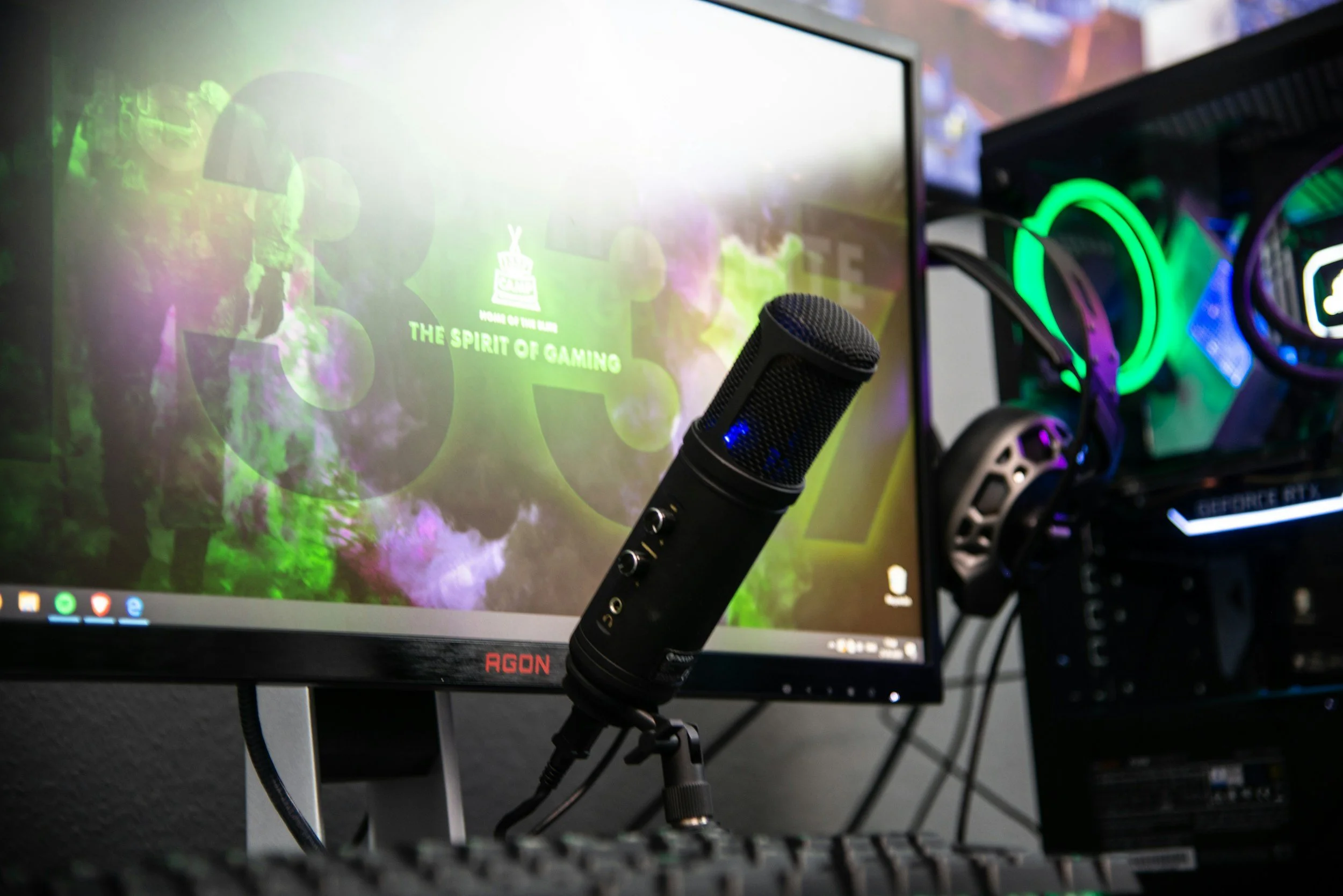
Every performer eventually discovers that the audience does not love them. It loves the version of them that appears under the lights.
The sociologist Erving Goffman argued in 1959 that all social life is a kind of theater. We maintain a "front stage" self (the version we present to the world) and a "backstage" self (the version that exists when the audience leaves and the door closes). The theory was meant to describe ordinary life: dinner parties, job interviews, the slight adjustments we all make to fit the room. But Goffman was writing in a world where the stage had an exit and the audience eventually went home.
Kai was twenty-six and had been streaming on Twitch for four years when he came to see me. He had built a following of about forty thousand (not famous, not struggling, but in that particular middle territory where the algorithm notices you just enough to make you afraid of being forgotten). He played competitive shooters, mostly, and he was good at it in the way that matters on camera: fast hands, sharp commentary, and the kind of easy charisma that makes a viewer feel like they've been invited into a friend's living room. His girlfriend had urged him to come in.
She told him that, for a while now, their apartment had felt more like a studio than a home.
What Kai described in our first session was not, by his own account, a crisis. He slept poorly (a circadian rhythm disrupted by years of late-night streams that had drifted from midnight to 3 AM). He felt anxious on days he didn't stream (not about anything specific, just a diffuse, buzzing unease that resolved the moment he went live). He had stopped playing games for fun entirely. And he had noticed, with the quiet alarm of someone who catches their own reflection in a window and doesn't recognize it, that the person on camera had become more real to him than the person sitting in my office.
His room, he told me, had the particular stillness of an office. Sterile and there for working, not living.
How Does Streaming Affect Mental Health?
Content creation imposes a set of psychological pressures that are specific, measurable, and surprisingly under-studied.
A 2025 study by Creators 4 Mental Health (in partnership with Lupiani Insights & Strategies, with data collection supported by Harvard's Center for Health Communication) surveyed 542 creators across North America. 62% reported experiencing burnout. 69% said they obsess over the performance of their content. 58% reported that their self-worth declines when content underperforms. And 10% reported having suicidal thoughts related to their work (nearly double the rate in the U.S. adult population, according to NIMH data).
These are the numbers of an occupational hazard.
And it affects not just streamers, but lifestyle vloggers, educational creators, comedy and sketch creators, musicians building an audience, anyone whose livelihood depends on the algorithm.
The pressures are structural. Platform algorithms on Twitch, YouTube, and TikTok reward constant output and penalize absence (take a week off and your visibility drops, your subscriber count dips, your income shrinks). Income is tied not to the quality of the work but to the volume of attention it captures. And the work itself requires a particular kind of emotional labor that has no equivalent in most professions: the sustained performance of authenticity. You must be yourself on camera, but the version of yourself that keeps people watching, donating, subscribing, clipping, and coming back tomorrow.
When I first encountered these presentations in my training at Harvard's psychiatry residency program, I made the mistake I suspect most clinicians make: I treated the symptoms without understanding the structure. Anxiety is anxiety, I thought. Sleep disruption is sleep disruption. But the anxiety of a person whose income, identity, and social world all live inside the same platform (and can all disappear with the same algorithm shift) is not the same clinical entity as generalized anxiety in someone with a stable job and a predictable schedule.
I had to learn that the medium is part of the diagnosis.
What Is Parasocial Relationship Stress?
A parasocial relationship is a one-sided emotional bond in which a viewer feels genuine intimacy with a creator who does not (and cannot) reciprocate at the same depth. This is not pathological on the viewer's side; research from the field of media psychology has studied the phenomenon since Horton and Wohl first described it in 1956. It is a normal human response to sustained exposure to someone who speaks directly to you, shares personal details, and responds (occasionally, partially) to your messages in real time.
But for the creator on the receiving end, the asymmetry is psychologically corrosive.
Forty thousand people feel they know Kai. Kai does not know them.
Each one carries an expectation (that he will be funny today, that he will respond to their message, that he will remain the person they bonded with six months ago), and the aggregate weight of those expectations is enormous, invisible, and impossible to satisfy. When he sets a boundary (takes a break, declines to discuss something personal, or changes his content style), a subset of his audience experiences it as a betrayal.
He receives messages that range from disappointed to threatening.
The clinical term for this is "boundary violation," but that term captures nothing of what it feels like to have strangers grieve a version of you that you never fully controlled.
I understand this culture from the inside, not just the clinic. Gaming is where my own fluency runs deepest, but the platform dynamics that drive a game streamer's mental health are the same ones shaping a lifestyle vlogger's or a musician's. When a patient tells me about algorithmic anxiety or the dread of a dying subscriber count, I do not need them to educate me before we can do clinical work. A clinician who doesn't understand the medium will risk misdiagnosing the problem (treating an occupational reality as a personal failing, or worse, suggesting you simply log off).
When Should a Content Creator See a Psychiatrist?
The signs are often the same ones that appear in any high-pressure profession, but they wear different clothes. Sleep disruption is the most common and the most underestimated. Streaming culture normalizes irregular sleep to a degree that would alarm any sleep medicine specialist, and chronic circadian disruption is associated with increased rates of depression, anxiety, and impaired cognitive function. If your sleep schedule has drifted by more than two hours from where it was a year ago, and you cannot pull it back without losing income, that is a problem worth taking seriously.
Beyond sleep, watch for (1) the inability to enjoy the thing you built your career around (anhedonia, clinically), (2) anxiety that is specifically tied to metrics (not a general trait but a conditioned response to the platform's feedback loops), (3) increasing difficulty distinguishing between your on-camera self and your private self (identity diffusion, in the psychodynamic literature), (4) withdrawal from offline relationships, and (5) the sense that rest is something you have to justify rather than something you are entitled to.
If you recognize yourself in any of that, you are not weak, you are not failing at something other creators handle just fine (they don't, as the data makes clear), and you do not need to wait until you are in crisis.
A psychiatrist who understands both the clinical and the cultural dimensions of your work can help you understand what is happening, build a treatment plan that accounts for the real constraints of your career, and (when appropriate) address the anxiety, depression, or insomnia with medication, therapy, or both. If you have never seen a psychiatrist before and are uncertain what that looks like, here is what to expect at your first appointment.
You do not need to explain your career to your psychiatrist in order to get help. But it helps enormously when you don't have to.
[If any of this resonates, I'd welcome a conversation. You can reach me via email.]
What Actually Helps?
Treatment that works for content creators requires the same foundation that all good psychiatric treatment requires (a clinician who listens, a relationship built on trust, and a treatment plan tailored to the actual person in the room) combined with a genuine understanding of the occupational context.
The specific interventions depend on the presentation, but the most common tools include structured sleep hygiene adapted to irregular schedules, therapy (psychodynamic work is particularly useful for identity diffusion and the front-stage/backstage collapse; cognitive approaches help with the metrics-driven anxiety loops), and medication when symptoms have reached a severity that therapy alone cannot address quickly enough.
What I find most often, though, is that creators arrive in my office having never had someone take their work seriously as work. Their previous providers told them to reduce screen time, set boundaries with their audience (as though this were as simple as putting up a sign), or consider whether content creation was "really" a sustainable career. This is the clinical equivalent of telling a surgeon to work fewer hours without addressing the system that demands them. The work is real. The pressures are real. The suffering is real.
Treatment starts by believing that.
Goffman's front stage and backstage were always a simplification (he knew this). No one is only performing, and no one is ever entirely offstage. But for creators, the ratio has shifted so far toward the front that the backstage has shrunk to almost nothing. Therapy, at its best, is the reconstruction of that private space: a room where no one is watching, no one is subscribing, and the person sitting across from you is not an audience of one but a collaborator in the work of figuring out who you are when the stream ends.
Kai and I worked together for several months.
We addressed the sleep first (melatonin, a structured wind-down protocol, a hard stop to streaming by 1 AM that cost him viewers and bought him something more valuable). We addressed the anxiety through a combination of therapy and a low-dose SSRI that he had been afraid to try (he worried, as many patients do, that medication would dull the quickness that made him good on camera; it did not). And we spent a great deal of time on the question that had brought him in without his knowing it: who is Kai when the camera is off?
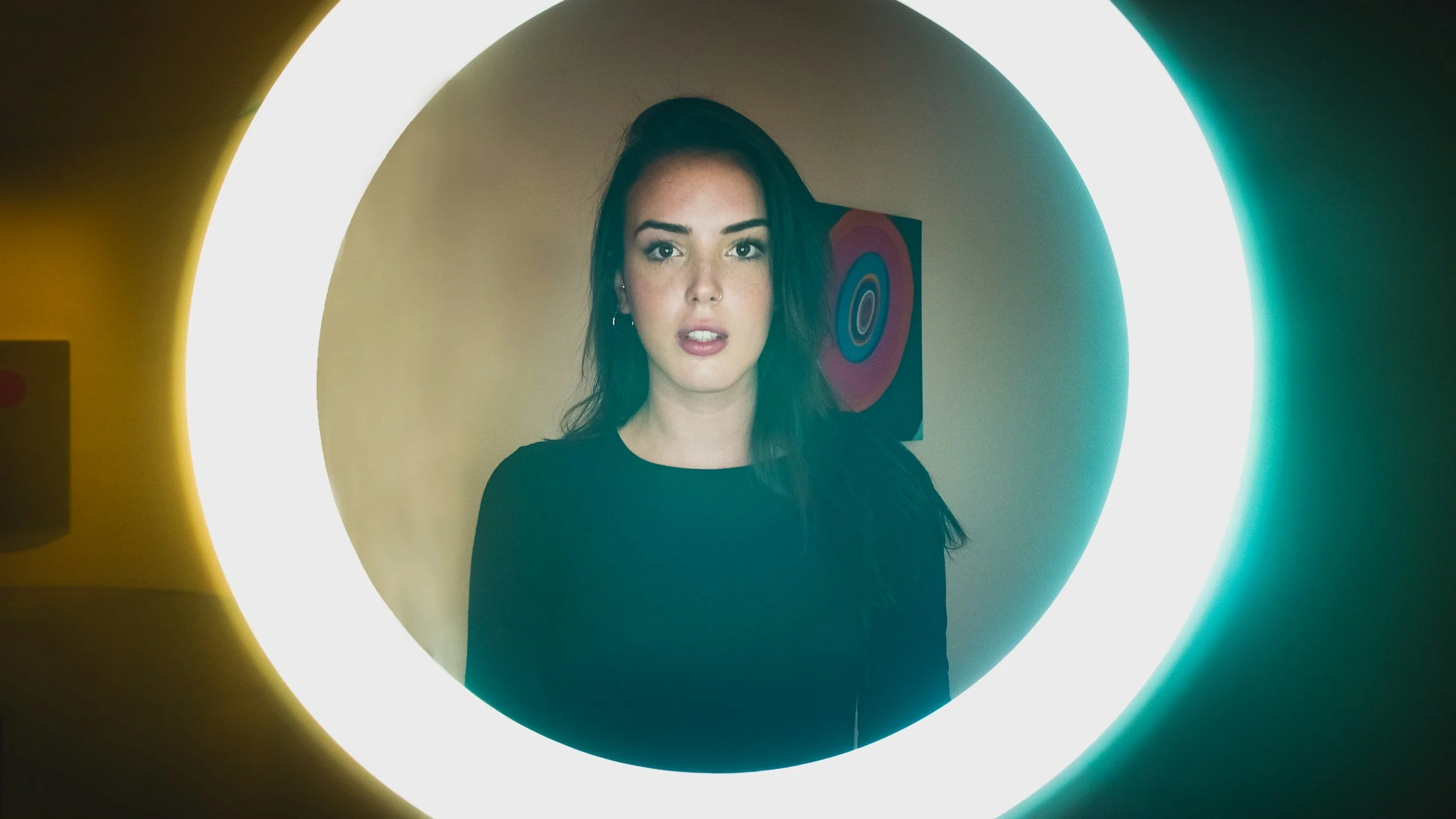
He did not have an easy answer. But he told me recently that he'd sat down to record, started his setup, and then (for reasons he couldn't fully explain) closed the software and turned off the ring light. He just played. He said the room looked different without the light on. Smaller. More real.
More like his.
Frequently Asked Questions
Do streamers and content creators have higher rates of mental health problems?
Yes. A 2025 study of 542 North American creators found that 62% experience burnout and 10% report suicidal thoughts related to their work, nearly double the U.S. adult population rate. Financial insecurity (69%) and obsession over content performance (69%) are the most commonly reported stressors. These are occupational hazards but can (falsely) feel like personal failures.
How does streaming affect mental health?
Streaming imposes a specific combination of pressures: irregular sleep schedules, income instability tied to audience metrics, the emotional labor of sustained on-camera authenticity, parasocial relationship management, and algorithmic penalties for taking breaks. Over time, these can produce clinical anxiety, depression, circadian rhythm disruption, and identity confusion between the on-camera persona and the private self.
What is parasocial relationship stress?
Parasocial relationships are one-sided emotional bonds that viewers form with creators. For viewers, these are a normal part of media engagement. For creators, the aggregate weight of thousands of people feeling entitled to intimacy, consistency, and access creates a form of relational burden that is difficult to manage and rarely discussed in clinical settings.
When should a content creator or streamer see a psychiatrist?
Consider seeking help when your sleep has been disrupted for more than a few weeks, when you no longer enjoy the work that once motivated you, when anxiety about metrics or audience reactions is affecting your daily functioning, or when you notice increasing difficulty separating your on-camera self from your private identity. You do not need to be in crisis to benefit from treatment.
The patients and individuals described are composites. They are drawn from real clinical encounters, real lives, and real systemic failures, but their names, biographical details, and identifying circumstances have been changed, combined, and reimagined to protect the privacy of the people whose experiences inspired them. The emotional and medical truths are preserved; the particulars are not. This is a form of fidelity, not of deception: the goal is to honor what these stories reveal about the human experience of illness and care, while ensuring that no one's private life becomes public without their consent. Prior results do not guarantee future results in any particular case.
J. Nicholas Jung Shumate, MD, JD is a Harvard-trained psychiatrist and sees patients throughout the Boston, Brookline, Cambridge, and Newton, MA region and supervises trainees at Harvard Medical School. He completed his residency training at the Harvard Psychiatry Training Program at Beth Israel Deaconess Medical Center.
