Burnout or Depression? How a Psychiatrist Tells Them Apart
Last updated: July 11, 2026
Burnout and depression can look almost identical from the outside, but they are not the same thing. Burnout is an occupational state (exhaustion, cynicism, and a sense of ineffectiveness) that tends to ease when you step away from work. Depression is a medical condition whose flatness and hopelessness follow you everywhere, regardless of the job.
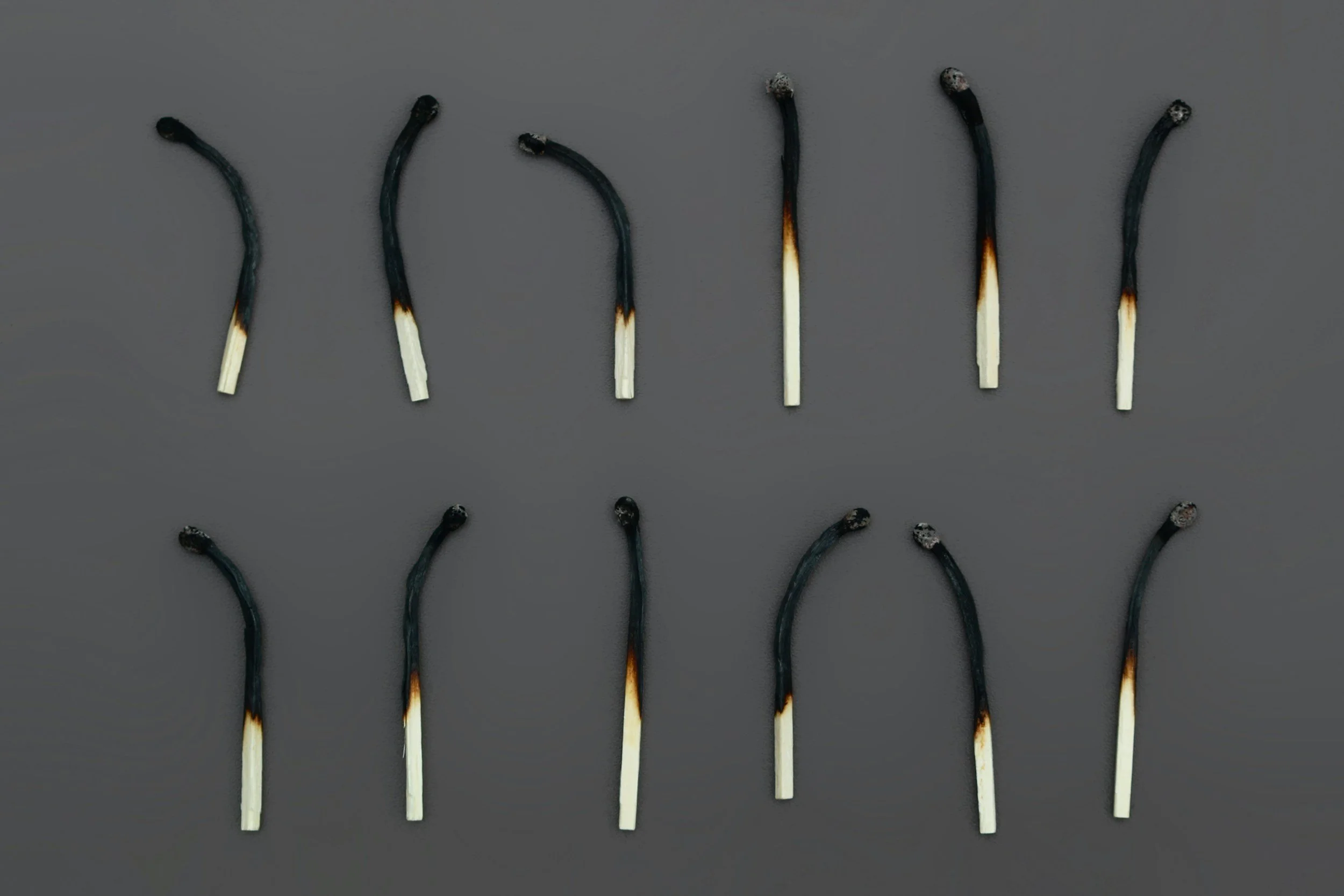
Most tiredness answers to a weekend. Elena Park's had stopped answering.
A hospitalist in her late thirties, she had spent a decade learning the ordinary kind of tired (the post-call fog, the endless shifts, and the coffee that stopped working around residency), and she had always recovered. A few days off, a weekend with her wife and their aging beagle, and the color came back. Then, in her fourth year on the wards, the days off stopped working. She took a trip to Lisbon and felt nothing, standing on a hill above the city her wife had wanted to see for years while the view arrived in her eyes without reaching anywhere further.
Elena assumed she was burned out, and most of my patients in her position assume the same. But the word "burnout" has stretched to cover so much that it now hides at least three different problems, only one of which is actually burnout.
What's the difference between burnout and depression?
Burnout is a response to your job; depression is a condition of your whole life.
The World Health Organization classifies burn-out as an occupational phenomenon rather than a medical diagnosis, defined by three dimensions: energy depletion, cynicism or mental distance from the work, and a sense of reduced effectiveness. It is, by definition, tied to the job. Depression is a clinical illness, and its two hallmarks (a pervasive loss of pleasure and a corrosive sense of worthlessness) do not stay politely at the office. They come home. They sit down at your table.
The term itself began as an act of attention.
In 1974, the psychologist Herbert Freudenberger noticed that volunteers at a free clinic (idealistic and generous, the ones who cared most) were burning down to ash. He borrowed a word then used for people hollowed out by drugs, and the word "burnout" entered the language. From the beginning, it described people undone by how much they had given to their work.
Why do burnout and depression feel so similar?
They overlap because exhaustion sits at the center of both. Strip away the labels, and the raw experience (no energy, no interest, and the sense of performing a life rather than living it) can be nearly impossible to tell apart.
Researchers have argued for years about whether burnout is even separable from depression, and the symptom everyone agrees is core to it (exhaustion) tracks more closely with depression than with burnout's other features. I take that question seriously for reasons of my own. Before medicine, I practiced at a large law firm, and I know from the inside what a certain kind of work does to a person. The billable hour eats the evening, the adversarial posture rides home with you in your jaw, and a whole self slowly converts into a resource to be spent.
When I left, the fog lifted within weeks. What I had was depletion, and depletion has a cause you can name and, sometimes, leave behind.
How can you tell whether it's burnout or depression?
The clearest test is whether it lifts when you step away from work.
Burnout tends to ease with real distance (a genuine vacation, a leave, or a different job) and stays mostly confined to the work itself. Depression does not lift on vacation, and it does not stay in one corner of a life.
So I ask about the rest of a life.
Can you still enjoy the things that have nothing to do with your job (the beagle, the garden, and the friend who makes you laugh)? If the pleasure is gone everywhere, that points toward depression. I ask whether the harsh voice is proportional, because feeling ineffective at work is burnout's third dimension, while believing you are worthless as a person is something else. And I ask, plainly, about thoughts of death or of not wanting to be here, because those belong to depression and change what we do next.
A third condition hides inside the same word, and it runs the other way.
Some people are worn down not by carrying too much but by carrying almost nothing that matters, underused and under-challenged and cut off from any sense that the work means anything. Two Swiss consultants, Philippe Rothlin and Peter Werder, gave it a name in 2007. They called it boreout. The bored-out professional and the burned-out one can walk into my office looking identical (flat, depleted, and dreading Monday). When a successful person tells me they feel hollow, the question underneath is usually not how much they are doing, but whether any of it lines up with what they value. That question belongs to therapy more than to a prescription pad.

Does the difference change how it's treated?
Yes, which is why the distinction is worth the trouble.
Burnout responds to changes in the conditions that produced it (workload, control, recovery, and the fit between the job and the person). Depression usually needs treatment in its own right, which may include therapy, medication, or both. Treating a depression as burnout leaves someone waiting for a vacation to fix an illness that vacations do not fix. Treating burnout as a chemical problem can medicate away a signal that was trying to say something true about the work or the life.
This is one reason I value being a psychiatrist who also does the therapy. The same clinician can weigh biology and meaning in one conversation and adjust as the picture clarifies. If you are not sure which you are living inside, that is worth bringing to someone. You can reach out here, or see what a first visit looks like.
Elena and I spent our first few sessions paying the kind of attention Freudenberger once paid his volunteers. The exhaustion had outlasted every vacation for more than a year, the pleasure had drained from her garden and her music and her marriage alike, and the harsh internal voice had grown a vocabulary that had nothing to do with the hospital. This was depression wearing burnout's clothes. We treated the depression.
Months later she mentioned, almost in passing, that she had planted tomatoes again. She said the first ripe one had tasted delicious.
Frequently Asked Questions
Is burnout a mental illness? No. The World Health Organization classifies burn-out as an occupational phenomenon rather than a medical condition. It is real and it matters, but it is defined by its relationship to work, not as a disease of the individual.
Can burnout turn into depression? Yes. Prolonged, unaddressed burnout is a recognized risk factor for depression, and the two frequently coexist. If the exhaustion no longer lifts when you rest and the flatness has spread beyond work, it is worth being evaluated.
Can you have burnout and depression at the same time? Often, yes. Many people arrive with features of both, which is exactly why the difference is best sorted out with a clinician rather than a checklist. The goal is to identify what is primary so that treatment targets the right thing.
J. Nicholas Jung Shumate, MD, JD is a Harvard-trained psychiatrist who provides integrated therapy and medication management to adults throughout Massachusetts, including the Boston, Brookline, Cambridge, and Newton region. He completed his residency at the Harvard Psychiatry Training Program at Beth Israel Deaconess Medical Center and supervises trainees at Harvard Medical School.
The patients and individuals described are composites. They are drawn from real clinical encounters, real lives, and real systemic failures, but their names, biographical details, and identifying circumstances have been changed, combined, and reimagined to protect the privacy of the people whose experiences inspired them. The emotional and medical truths are preserved; the particulars are not. This is a form of fidelity, not of deception: the goal is to honor what these stories reveal about the human experience of illness and care, while ensuring that no one's private life becomes public without their consent. Prior results do not guarantee future results in any particular case.
